Regional warehouse demand in Russia tops 1 million sq m in the third quarter of 2026 for the first time
Deals reached 1.115 million sq m, about 2.5 times the level of a year earlier. E-commerce took 62% of deals, but CORE.XP sees no sustained recovery behind the growth.
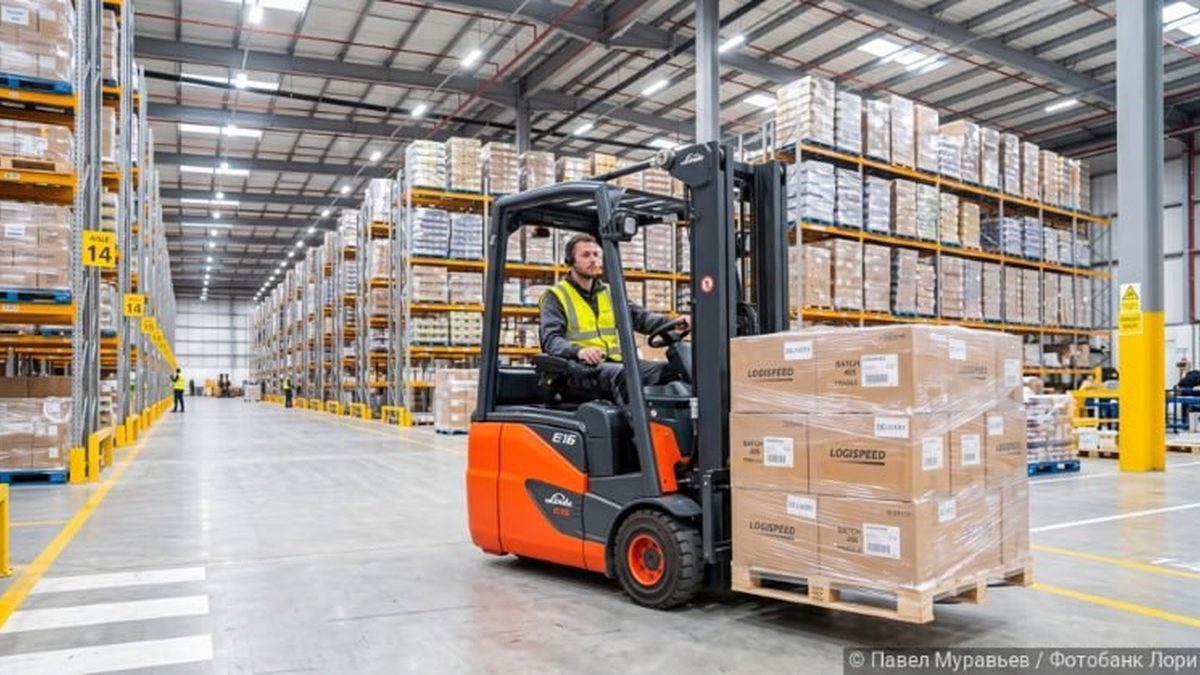
According to logirus.ru, a Russian logistics news site, warehouse deals in Russia’s regions totalled 1.115 million sq m in the third quarter of 2026. This is an all-time quarterly record. A year earlier, demand stood at 438 thousand sq m. The previous high was set in the second quarter of 2023 at 971 thousand sq m. The new result beats it by 15%.
E-commerce remained the main source of warehouse demand, accounting for 62% of deals. Almost half of deals, 46%, took place outside the eight largest logistics markets. The source does not say whether it calculates these shares by floor area or by number of deals. Nor does it list the largest markets themselves or the regions where the deals took place.
Most of the year’s volume came in one quarter
Against previous years, the nine-month result for 2026 looks more modest than the quarterly record. Since the start of the year, deals have totalled 1.883 million sq m. This is 38% more than in the same period of 2025, but less than in the first nine months of 2023 and 2024.
Comparing the two figures shows that more than half of the year-to-date volume came in the third quarter. The source does not give separate figures for the first and second quarters. The quarter was the best on record, but over nine months 2026 still trails 2023 and 2024.
More warehouses are built to order
Almost all deals were leases: they account for more than 99% of the volume. Warehouses are bought or built for own use only in isolated deals.
The structure of leasing has shifted. The share of BTS leases rose from 25% to 46%. BTS, or build-to-suit, means a warehouse is built to the requirements of a specific tenant and leased to it once complete. Leases of ready-built warehouses accounted for 54% of leasing.
The rise of BTS means that almost half of leases were signed for warehouses built for a specific tenant. Such a warehouse is let before it is finished and, at least at first, does not reach the open rental market.
A cautious forecast from CORE.XP
The market assessment comes from CORE.XP, a Russian commercial real estate consultancy, and it is restrained:
CORE.XP links the activity to current circumstances: there is no sustained recovery in demand, and the trend depends on macroeconomic conditions.
From logirus.ru
CORE.XP forecasts 3 million sq m for the whole of 2026. Over nine months, 1.883 million sq m has been reached. For the forecast to come true, the fourth quarter would need roughly as many deals as the record third quarter. The forecast therefore assumes another quarter of strong demand, yet CORE.XP does not regard such demand as a sustained recovery. The source does not specify which conditions could break this pace, mentioning only the dependence on the macroeconomy.
What this means for readers
E-commerce accounts for 62% of deals, so anyone looking for a warehouse in the regions should expect online retailers among the competing tenants. Within leasing, 46% were build-to-suit and 54% were ready-built warehouses, though the source does not say whether these shares are by area or by number of deals. When searching, it is worth knowing in advance whether build-to-suit, with its lead times, will work.
For logistics operators carrying freight to the regions, the 46% figure shows that almost half of deals took place outside the eight largest markets. But these data should not be relied on as a forecast. The source names neither the regions nor the tenants, and CORE.XP states plainly that there is no sustained recovery in demand. The fourth-quarter results will show whether deal volume stays high: the 3 million sq m full-year forecast requires another quarter at record level.
Sources
Spotted an error? Tell the editors; we fix it and note it here.